Some notes on fund selection, written after the Citywire Zurich Forum 2026.
By the end of the afternoon, I had to admit something that does not sit entirely comfortably with me.
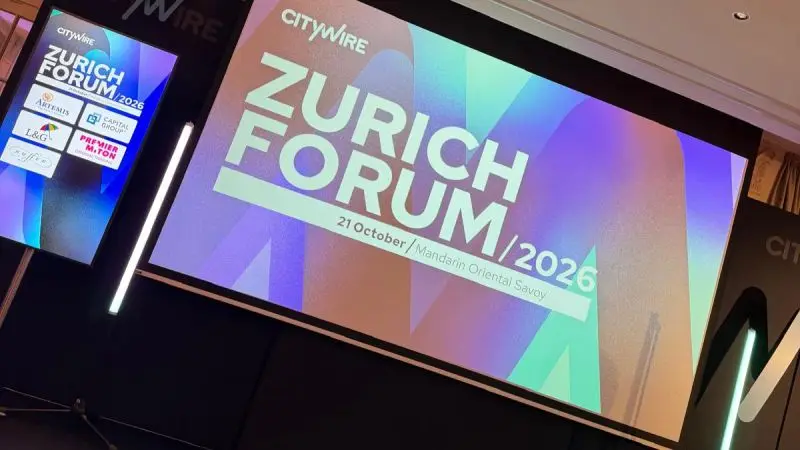
The Citywire Zurich Forum at the Savoy in Zurich ran on short, tightly scheduled sessions. Thirty minutes to explain what you do, why it holds, and why it should matter to the person across the table. No warm-up, no slow build.
Due Diligence Tells You Less Than You Think
Here is the uncomfortable part. We spend weeks on due diligence. Questionnaires, track records, risk analytics, operational checks—all necessary, none optional. And yet half an hour in a room regularly tells me something the documents never quite do.
Not whether the strategy works. Whether the person running it knows where it does not.
That distinction came through clearly on Wednesday, and the managers get credit for it.
Several used their 30 minutes to go straight to the limits of their own approach — what they deliberately avoid, what conditions hurt them, what they would do if the thesis broke. That takes more confidence than a strong quarter does.
Why Fund Selection Matters More in Open Architecture
For an independent wealth manager, this matters more than it might elsewhere. In open architecture, there is no in-house range to fall back on. Every strategy in a client portfolio is there because someone chose it over the alternatives, and that choice has to hold up years later, usually in a difficult market rather than a good one.
A Filter, Not a Shortcut
So the format was not a shortcut. It was a filter — and a surprisingly honest one.
My thanks to the Citywire team for an exceptionally well-run afternoon, and to every manager who used their half hour properly.
The question I left with: how much of fund selection is really people’s judgement, and how much are we prepared to admit?
What I Take Back Into Our Own Fund Selection
For me, the answer is not to replace the documents with gut feeling. Rather, the two belong together. The questionnaire shows what a manager does; the conversation, in contrast, shows how that manager thinks when something goes wrong. That is also why I value multiple research sources instead of a single house view.
A private bank can lean on its own product shelf when a strategy disappoints. We cannot, and frankly, we do not want to. Instead, every position in a discretionary mandate has to earn its place again each year.
Finally, afternoons like this one remind me why good industry events are worth the time for fund selection. Not because of the slides, but because of the conversations between them. In short, thirty minutes should not be enough. Often, however, it is.
Source: https://vapa.ch/fund-selection-citywire-zurich-forum/ · vapa.ch