
Disappear Or Merge
People often ask whether independent wealth managers will disappear. In most cases, this is unlikely to be how the transition
⚠️ AI-assisted translation – minor discrepancies possible.

People often ask whether independent wealth managers will disappear. In most cases, this is unlikely to be how the transition

During a recent stay in Marrakech, one thing struck me almost immediately. Banks seemed to be everywhere. Branches, cash machines

In independent wealth management, the product is the advisor. Everything else is available to everyone. The funds, the structured products,

I have sat in enough adviser transition conversations to notice a pattern that very few people in this industry discuss

Many Private Bankers ask a straightforward question when exploring independence. What does an independent wealth manager do in practice? At

In my years at a US investment bank, I knew one world very well. The discipline was real. The training

Zurich’s Bahnhofstrasse is not just one address. It is a street of possibilities. On the left and on the right,

UHNW client retention in wealth management is one of those topics every firm claims to understand, and few actually measure
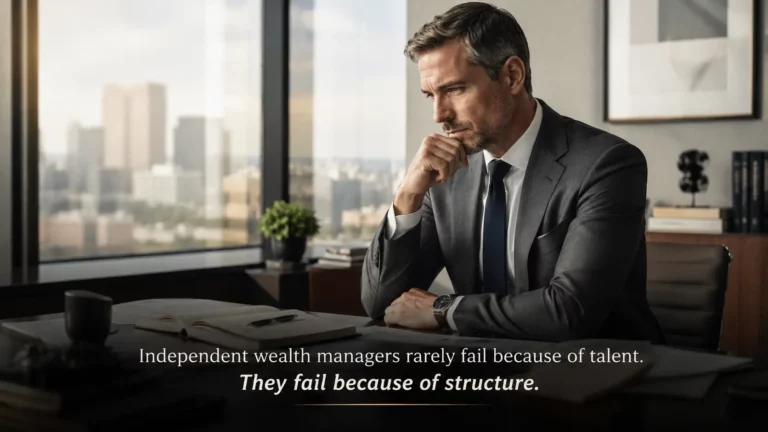
My first experience with an independent wealth manager began with strong momentum. I joined a group of seven highly driven

380 per cent in six years. This is the increase in formal “restrictions” imposed by Swiss banks, as reported to
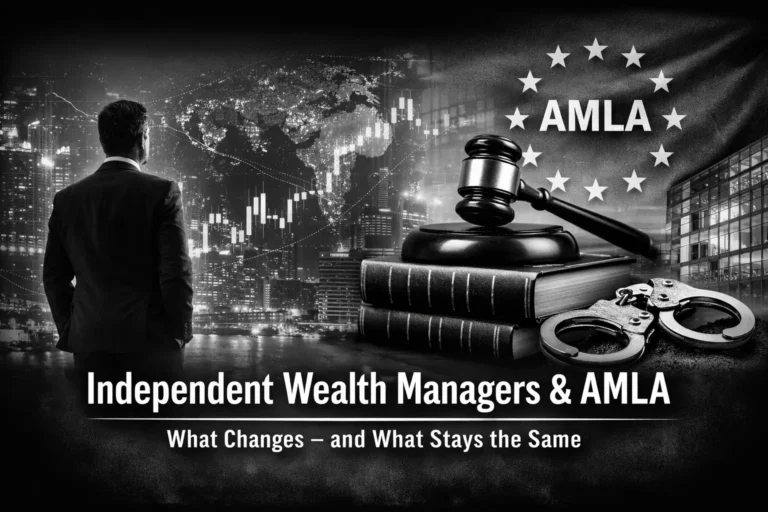
What Changes – and What Stays the Same his article provides general information only and does not offer legal, regulatory

In wealth management, advice is almost always framed in terms of action. Clients expect ideas, recommendations and solutions, and advisers
As 2026 begins, global markets and geopolitics are entering a phase shaped by adaptation rather than resolution. Structural shifts that defined recent years continue to influence investment decisions, policy choices and wealth-management strategies.
Geopolitical tensions remain a central factor. Relations between the US and China stay complex, particularly around technology, supply chains and security. The war in Ukraine is still a key uncertainty, keeping energy, defence and commodity markets sensitive to political developments. Europe continues to push forward with its energy transition, while many emerging markets—especially in Asia and parts of Africa—are gaining strategic importance as production and investment flows diversify.
Financial markets at the start of 2026 reflect cautious optimism. Inflation pressures have eased compared with previous years, allowing several central banks to adopt a more flexible stance. Interest-rate paths are expected to remain data-dependent, supporting selective opportunities across equities and fixed income. Technology, healthcare and AI-driven business models remain in focus, while investors increasingly look for earnings quality and balance-sheet strength rather than pure growth narratives.
Sustainable investing continues to evolve. ESG is becoming more data-driven, more regulated and more outcome-focused. Rather than broad labels, investors increasingly demand transparency, measurable impact and clear alignment with long-term value creation. This shift is particularly relevant for private clients with intergenerational objectives.
Digital assets and financial infrastructure are moving from experimentation toward practical application. Improved regulation, custody solutions and tokenisation frameworks are supporting broader institutional participation. While volatility remains part of the asset class, use cases around settlement, efficiency and access continue to expand.
Wealth management in 2026 is defined by flexibility, technology and personal judgement. AI tools support research, risk analysis and reporting, but human oversight and responsibility remain central. Clients expect clear communication, disciplined strategy and guidance through uncertainty. Hybrid models—combining institutional-grade tools with independent advice—are increasingly seen as the benchmark rather than the exception.
Overall, 2026 is shaping up as a year that rewards resilience, clarity and adaptability. In an environment defined less by certainties and more by direction, successful wealth management depends on anticipating change, managing risk proactively and staying closely aligned with clients’ long-term goals.
get the weekly insights
Fees, mandates and the business of independent wealth management in Switzerland – straight to your inbox.
search the blog
popular topics