From Narrative to Numbers: Launching a Theme-Based Model Portfolio
In December 2024, a simple model portfolio was launched with a clear objective: to test a theme-based investment idea under real-world conditions. The focus was never on theory or optimisation, but on practical implementation and measurable outcomes.
To support the initial investment framework, ChatGPT was used as a structuring tool for the outlook. This approach reflected a broader shift in finance, where digital tools increasingly complement human judgment—a dynamic also explored in the digital transformation of finance.
From the outset, the emphasis remained on simplicity, transparency, and comparability. Performance needed to be easy to track, explain, and evaluate.
Portfolio Construction: Simple by Design
- Five equities, equally weighted
- Approximately CHF 5,000 per position
- Buy-and-hold strategy, no rebalancing
- Unhedged FX exposure, reflecting a typical Swiss private client experience
- Reference currency: CHF
The stocks were selected purely based on the 2025 outlook themes: artificial intelligence, healthcare innovation, electrification, infrastructure, and resilient US consumption. These themes were later expanded upon in the broader Investment Outlook 2026.
The holdings: Amazon, ASML, Eli Lilly, Siemens, NVIDIA.
Portfolio 2025
Portfolio Performance at a Glance
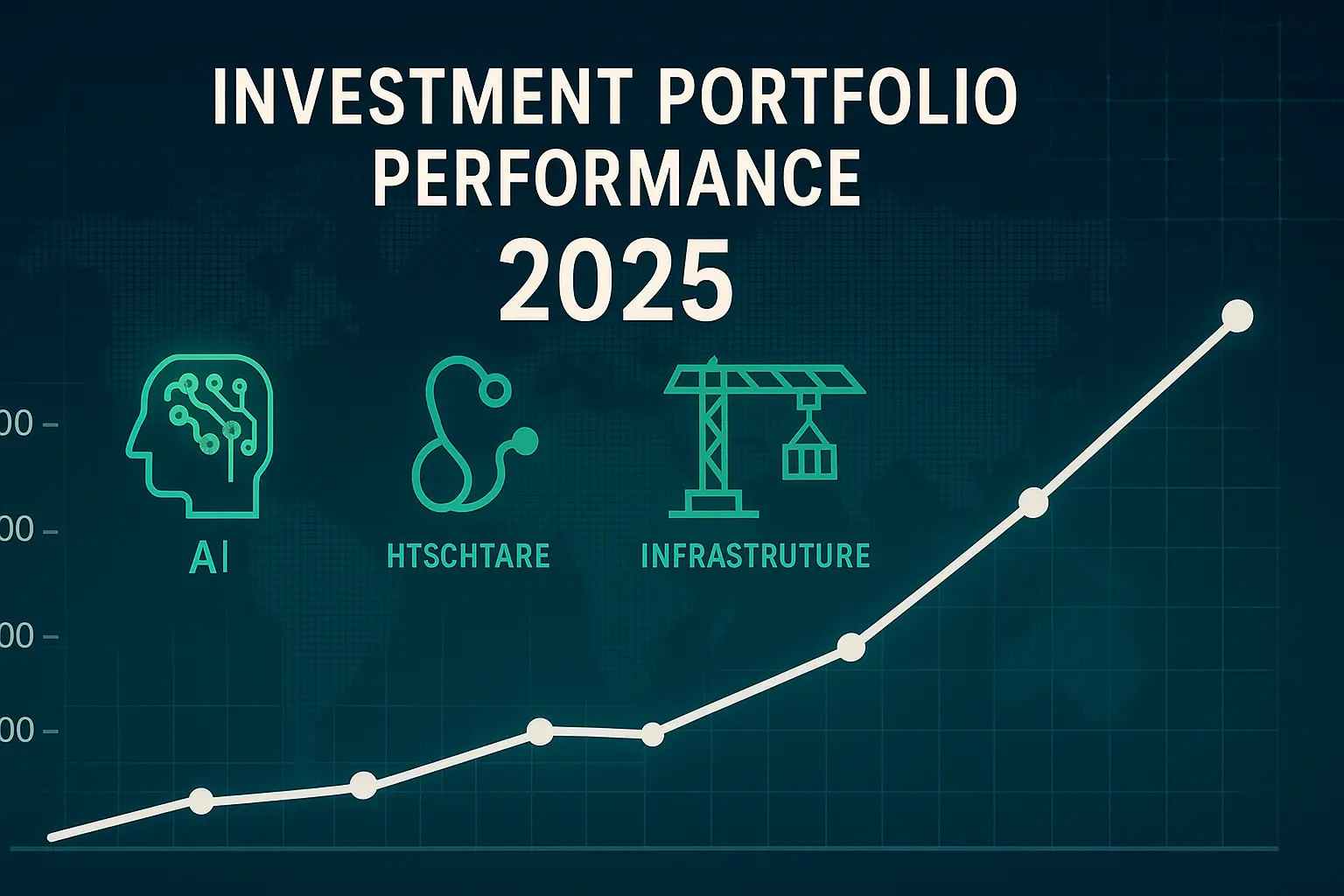
As of 13 December 2025, the portfolio shows the following aggregate result:
- Total invested: CHF 23’835.94
- Current market value: CHF 27’493.82
- Total profit (incl. dividends): CHF 3’814.17
- Overall performance: +13.87%
In absolute terms, this represents a solid double-digit return over roughly one year, achieved without leverage, derivatives, or tactical trading.
What Drove Performance?
Clear Winners
ASML (+29.97%)
The strongest contributor. Semiconductor capex linked to AI and advanced computing remained resilient despite macro noise. ASML once again demonstrated the power of monopolistic positioning.
Siemens (+22.26%)
Benefited from infrastructure spending, electrification, and digital industrial solutions — exactly as anticipated in the original outlook.
NVIDIA (+20.88%)
AI demand continued to surprise on the upside. Despite early valuation concerns, earnings momentum justified its inclusion.
Eli Lilly (+17.29%)
Healthcare innovation delivered as expected. Obesity and diabetes treatments translated into strong revenue visibility and share price appreciation.
The Drag
Amazon (-13.34%)
The only negative contributor. FX effects (USD weakness versus CHF) and margin concerns weighed on returns. Operationally solid, but the timing proved unfavourable.
This underscores a recurring reality in wealth management: even high-quality businesses can underperform over short horizons, especially when currency exposure remains unhedged—a topic often underestimated by private clients.
The Role of FX: An Underestimated Risk
Leaving FX exposure unhedged was a deliberate choice. The outcome was clear:
- USD positions (Amazon, NVIDIA, Eli Lilly) suffered from CHF strength
- EUR exposure remained broadly neutral
Without FX headwinds, headline equity performance would have been higher. The lesson is straightforward: currency risk is persistent, structural, and often overlooked — especially in CHF-based portfolios.
Was ChatGPT Useful as Investment Guidance?
The honest answer is nuanced. ChatGPT was not a stock picker. It did not optimise timing, manage FX exposure, or fine-tune valuations.
What it did provide was structure. It helped identify durable themes, frame investment narratives, and avoid purely speculative trades. In that sense, it functioned as a research assistant rather than a decision-maker — similar to how instinct and experience evolve, as discussed in the evolution of instinct in decision-making.
The Bigger Picture
A return of roughly 14% in CHF, achieved with full FX exposure and no active management, compares favourably with many balanced portfolios over the same period. More importantly, the portfolio behaved precisely as a thematic equity allocation should:
- Concentrated, yet diversified across structural drivers
- Volatile at times, but fundamentally coherent
- Driven by earnings and long-term trends rather than short-term hype
This makes the experiment valuable not because it “beat the market”, but because it validated a disciplined, theme-led investment process. The same mindset underpins long-term client relationships in wealth management.
Final Thoughts
So, was ChatGPT a good guide?
👉 As an idea generator and narrative synthesiser: yes.
👉 As a standalone investment decision-maker: clearly not.
Used thoughtfully, it can support research, challenge assumptions, and help articulate strategy. But human judgment, portfolio structure, and risk awareness remain essential.
And that, perhaps, is the most useful conclusion of all.
This model portfolio and commentary are for informational purposes only and do not constitute investment advice. Past performance is not indicative of future results. All investments involve risk.