For decades, wealth management rested on a quiet assumption: that the future would differ from the present without becoming unrecognisable.
Markets would rise and fall. Cycles would turn. Regulations and governments would change. But the underlying framework stayed stable enough for families and entrepreneurs to plan well beyond the next quarter — or the next decade.
That was never about certainty. It was about predictability.
Today, that assumption deserves a second look.
When internationality becomes the default
The families we work with are international by default. Their businesses cross borders, their assets are global, and their children increasingly study and build their careers in different countries. Internationality is no longer an advantage to be engineered. It is simply the environment in which wealth now exists.
I increasingly see succession plans that were sound under one country’s rules become fragile the moment a child settles in another. Nothing in the family changed. The map underneath it did.
At the same time, the variables are multiplying. Geopolitics, regulation, technology and shifting economic priorities now shape long-term planning as much as markets do. None of this is cause for alarm — strong institutions adapt, and the most durable financial centres have always evolved. But it does sharpen an old question.
If wealth is built over generations, what does predictability actually mean in a world that changes this quickly?
Predictability as a discipline for the adviser
My own view: predictability has shifted from a feature of the environment to a discipline for the adviser. We can no longer assume the road ahead is stable. The work is to map it honestly — to understand not only where markets may go, but how markets, jurisdictions, regulation and geopolitics move together.
Long-term wealth has never depended on returns alone. It depends on the ability to plan with confidence.
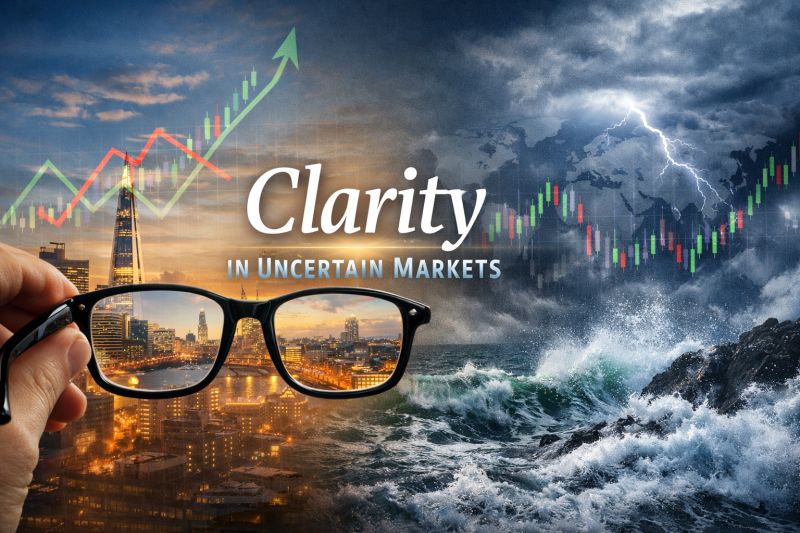
And confidence, in this environment, is not the absence of uncertainty. It is the quality of your understanding.
Views my own.
Source: https://vapa.ch/predictability-in-wealth-management/ · vapa.ch