My first experience with an independent wealth manager began with strong momentum. I joined a group of seven highly driven individuals, all commercially focused, all what I would now describe as fire types. At the time, it felt like the perfect setup. Partnership dynamics in wealth management seemed to be a function of energy and conviction. Decisions were fast, client conversations came naturally, and the atmosphere was one of constant forward motion.
What we did not see at the time was what we lacked. There was little earth in the system. Processes followed intuition rather than design. Governance remained informal. Water, in the sense of trust and emotional fluency, existed through personal relationships rather than shared responsibility. Air, the strategic distance that allows a partnership to step back and reflect, played hardly any role. We were focused on building, not on balancing.
For a while, it worked. Performance was good, clients responded well, and the lack of structure seemed more like a feature than a flaw. This is a familiar pattern when reviewing how independent wealth management is converging structurally with the broader industry. The entrepreneurial spirit that drives a firm to leave the bank is also the spirit that resists imposing internal discipline on itself.
Partnership Dynamics in Wealth Management: When Imbalance Becomes Visible
Then market conditions changed. Volatility increased. Pressure exposed the weaknesses that calmer markets had concealed. Under stress, too much fire amplifies friction rather than energy. Alignment weakens. Differences in expectations, risk appetite, and client philosophy that had remained dormant during the good years began to surface. The question of organisational balance moved from theoretical to immediate.
There was no single dramatic moment. Over time, paths simply diverged. The group gradually became smaller. It was not about capability. Everyone involved was talented and commercially capable. It was about balance and about the absence of structural elements that would have absorbed the friction before it became personal.
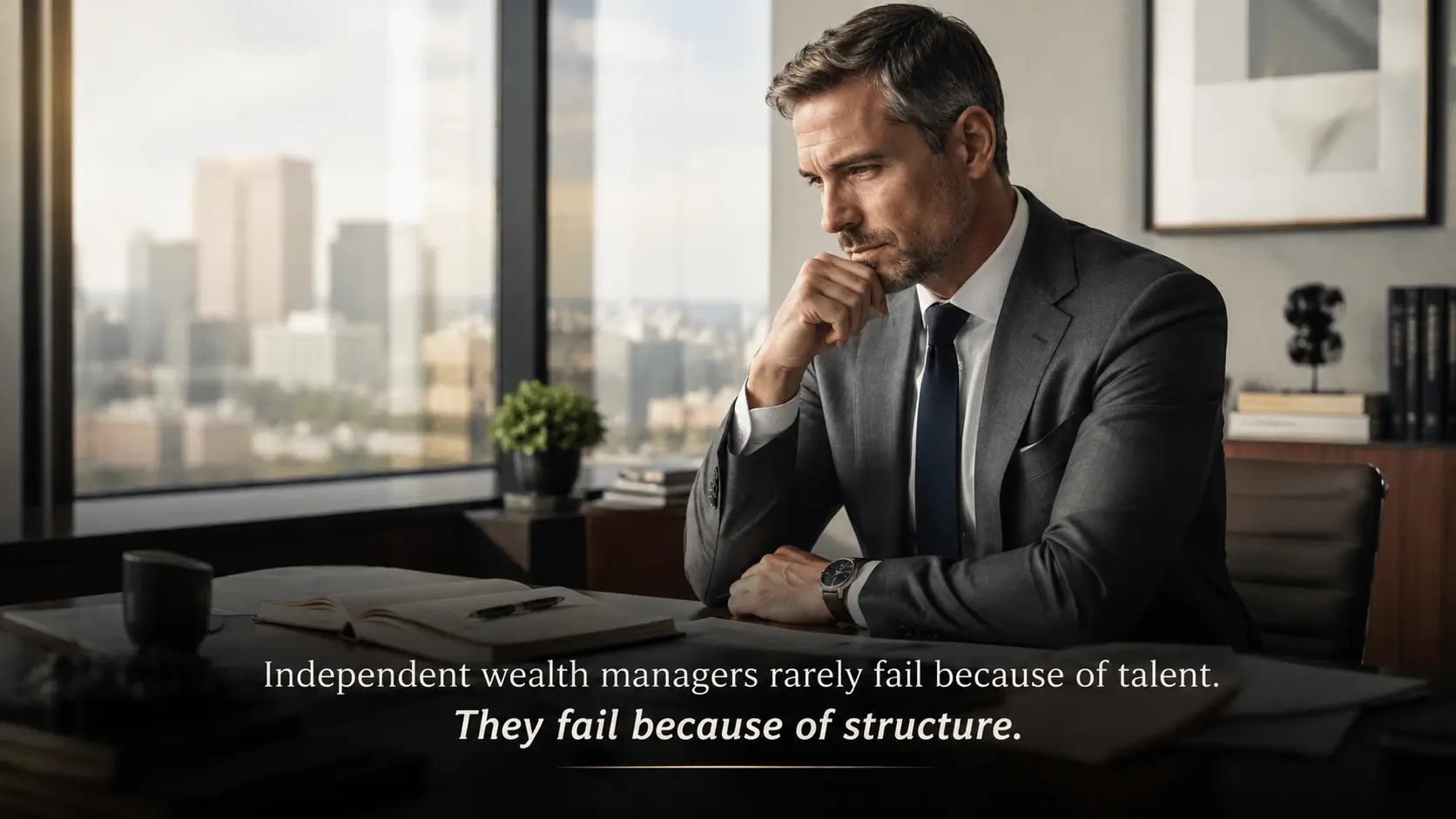
That experience stayed with me, and it shapes how I think about independent firms today. Independent wealth managers often underestimate how long an imbalance can remain invisible. Performance hides fragility. Success delays reflection. The market gives no warning before testing what a partnership is actually built on. Structure always matters in the end, even when it appears to be the least urgent priority at the outset.
What Balance Looks Like in Practice
This does not mean that every independent firm needs to mirror a bank’s institutional architecture. The whole point of independence is to operate differently. But difference is not the same as absence. A founder partnership benefits from governance even when the founders trust each other completely, perhaps especially then. Clear decision rights, documented expectations and a forum for strategic distance are not bureaucracy. They are insurance against the moment when the original alignment is tested. The strategic choice between different governance structures is therefore not only a question for clients, but also one that founders must ask themselves about their own firm.
Fire creates momentum. Balance creates endurance. Many of the structural questions that founders face also echo what we observe in the wider Swiss wealth ecosystem, where quiet, durable structures outlast more visible ones. The firms that endure are not necessarily the ones with the most talent, but the ones whose founders recognised early that talent without structure has a half-life.
Entrepreneurship in wealth management thrives on balance, not excess. The discipline to build governance while the firm is still small, to document processes while everything still feels obvious, and to invite uncomfortable conversations while the market is still favourable, is what separates partnerships that compound from those that simply burn brightly and then quietly disperse. For further reflections on these dynamics, the Swiss Independent Wealth Management Blog offers ongoing perspectives from inside the industry.